Whether you’re a nurse working a 12-hour shift, a teacher in the classroom all day, or a retail worker on your feet for hours at a time, standing can take a toll on your body. While it may not seem as physically demanding as running or heavy lifting, prolonged standing is one of the most underestimated stressors on the joints, muscles, and circulatory system.
The good news is that with the right strategies, you can minimize pain, protect your knees and ankles, and stay energized even during long days.
Why Standing All Day Feels So Hard
Unlike walking or moving, standing keeps your muscles in a constant state of contraction. This reduces blood flow and puts continuous pressure on your joints. Common issues include:
- Soreness in the knees, hips, and lower back
- Swelling in the feet and ankles
- Fatigue in the calves and arches
- Stiffness from lack of movement
Over time, long hours on your feet may even contribute to more serious conditions, including varicose veins, plantar fasciitis, or arthritis flare-ups.
Choose the Right Footwear
Shoes are your first line of defense. A poorly designed or unsupportive pair can magnify every ache. Look for footwear that offers:
- Cushioning in the heel and forefoot
- Arch support to prevent flattening of the feet
- A snug (but not tight) fit to reduce rubbing
- Low, stable heels
If your work requires standing on hard surfaces like tile or concrete, supportive shoes become even more critical. Pair them with cushioned insoles or orthotics if needed.
Move Whenever Possible
One of the best ways to combat fatigue is simply to avoid standing still. Even subtle movement improves circulation and reduces stiffness. Try:
- Shifting weight from one foot to the other every few minutes
- Doing small calf raises to keep the lower legs engaged
- Taking short walking breaks when possible
- Stretching your hamstrings and quads during downtime
Movement prevents blood from pooling in the lower legs and helps your muscles reset.
Strengthen the Supporting Muscles
Strong muscles are better at absorbing the stress of long hours on your feet. Building strength in your legs, hips, and core can dramatically reduce discomfort. Some effective exercises include:
- Squats and lunges to build quads and glutes
- Calf raises to strengthen the lower legs
- Glute bridges for hip and core support
- Planks for stability in the torso
Use Bracing and Supports
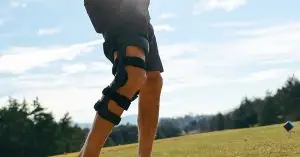
For people with knee pain or instability, a brace can be a valuable tool. Lightweight compression sleeves provide swelling control and gentle support, while wraparound braces offer more targeted stability. If arthritis is a factor, an unloader brace may help reduce pressure on the joint.
Bracing shouldn’t replace strength and mobility work, but it can complement them, especially during long shifts where your body is under constant stress.
Support Your Circulation
Poor circulation is one of the biggest challenges of standing all day. To combat it:
- Wear compression socks to reduce swelling
- Elevate your legs during breaks if possible
- Stay hydrated to keep blood flowing efficiently
- Avoid crossing your legs for long periods
These small changes can prevent fatigue from building up throughout the day.
Protect Your Environment
Sometimes it’s not your body that needs fixing – it’s your surroundings. If you’re able to, make adjustments like:
- Using cushioned floor mats in areas where you stand in one place for long periods
- Adjusting your work surface to avoid hunching or leaning
- Rotating between standing and sitting tasks when possible
A supportive environment makes long days far more manageable.
Pay Attention to Recovery
What you do after your shift matters just as much as what you do during it. Recovery habits should include:
- Stretching calves, hamstrings, quads, and hips to release tension
- Using ice packs or warm compresses on sore areas
- Foam rolling to ease tight muscles
- Sleeping with a pillow under or between your knees to reduce joint stress
Giving your body recovery time helps it adapt and prevents long-term wear and tear.
When to Seek Help
If you notice persistent knee pain, swelling that doesn’t go down, or sharp aches that worsen over time, don’t ignore them. These could be signs of a more serious condition that requires professional evaluation. A physician or physical therapist can help identify whether the issue is muscular, structural, or related to your daily workload.
Bottom Line
Standing all day is tough on the body, but with the right strategies, you can reduce discomfort and protect your joints for the long term. Supportive shoes, movement breaks, strength training, circulation boosters, and recovery habits all play a role. Bracing may also help when used correctly, especially for those with existing knee conditions.
By combining these strategies, you can not only survive but thrive through long hours on your feet. For a tool that you can rely on, we invite you to take a look at our range of braces. Addressing a wide range of needs, we just might have the solution for you!