Not all meniscus tears carry the same weight. Many are localized problems that, while painful, leave the meniscus largely able to do its job. A root tear is different. Because of where it occurs, this particular injury can undermine the entire function of the meniscus, setting off a chain of consequences that makes early recognition and appropriate treatment especially important.
A Quick Refresher on the Meniscus
Each knee contains two menisci, C-shaped wedges of cartilage that sit between the thigh bone and shin bone. They distribute load across the joint, absorb shock, and contribute to stability. The “root” is the point where each end of the meniscus anchors firmly to the bone of the tibia. That anchor is not a minor detail — it is what allows the meniscus to do its most important job.
What a Root Tear Is
A root tear is a tear or avulsion at or very near this bony attachment, typically within about a centimeter of the root. It can occur as a radial tear that severs the meniscus close to its anchor, or as a pulling-away of the attachment itself. Either way, the meniscus is effectively cut loose from the fixed point that keeps it in position under load.
Why It Matters So Much: Hoop Stress
The meniscus works by converting the downward, compressive force of the joint into circumferential tension around its ring — a mechanism known as hoop stress. Intact roots are what make this conversion possible, holding the meniscus in place so it can spread load across a wide surface. When a root tears, that hoop mechanism fails. The meniscus can no longer resist the pressure and begins to slide outward, a phenomenon called meniscal extrusion. Biomechanically, the effect is striking: a root tear has been shown to be roughly equivalent to removing the meniscus entirely.
The Downstream Consequences
Once the meniscus is no longer cushioning the joint properly, the exposed cartilage on the bone ends bears far more concentrated force than it was built to handle. The predictable result is accelerated joint wear and a rapid march toward osteoarthritis. This is why clinicians treat root tears with a seriousness that some other tears do not warrant — the concern is not only the current pain but the trajectory of the joint over the years that follow.
Who Gets Them
Root tears tend to fall into two groups. Degenerative root tears are more common in older adults, often those carrying extra weight or with a bow-legged (varus) alignment, and can be triggered by something as ordinary as a deep squat. Traumatic root tears are seen more often in younger, active individuals and frequently accompany other injuries, particularly tears of the anterior cruciate ligament. Symptoms can be less dramatic than a classic locking tear, which is part of why root tears are sometimes missed.
How They Are Diagnosed
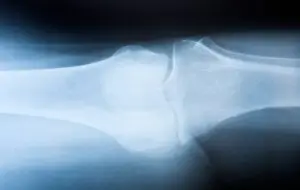
Root tears can be easy to overlook, which makes careful evaluation important. They do not always produce the dramatic locking or catching associated with other tears, and standard examination findings can be subtle. Magnetic resonance imaging is the key diagnostic tool: on an MRI, a root tear may reveal itself through characteristic signs, including the outward displacement of the meniscus known as extrusion and a gap where the intact root should appear. Because the injury’s significance is easy to underestimate from symptoms alone, imaging is often what elevates a root tear from a vague ache to a recognized problem with clear treatment implications.
How They are Treated
Because a root tear disables the meniscus so completely, contemporary practice has shifted toward surgical repair for suitable candidates. Techniques that reattach the root to the bone — such as transtibial pullout repair — aim to restore the hoop mechanism, reduce extrusion, and slow the progression toward osteoarthritis. Evidence increasingly favors repair over the older approach of trimming away meniscus tissue, which does little to address the underlying loss of function. That said, candidacy depends on individual factors including the state of the cartilage, joint alignment, age, and tissue quality; where repair is not appropriate, management focuses on reducing load and protecting the joint.
The defining lesson of the meniscus root tear is that location changes everything. A tear in the wrong place can neutralize the whole structure and place the joint on a fast track to degeneration. If knee pain follows a twisting injury or a deep squat, or accompanies a ligament injury, a thorough evaluation is well worth pursuing — timely diagnosis is what makes the more protective treatment options possible.