Meniscus tears are one of the most common knee injuries, affecting athletes, active adults, and people who perform frequent twisting or weight-bearing movements. Because these injuries can be painful and limit activity, many people wonder whether wearing a knee brace can prevent a meniscus tear from happening in the first place.
The short answer is: a knee brace can help reduce the risk of a meniscus tear, but it cannot guarantee prevention. Your risk depends on many factors, including activity type, knee mechanics, muscle strength, and overall joint health. A knee brace can play a supportive role—but it works best as part of a broader preventive strategy.
Below, we’ll dive into how braces may help, their limitations, and what else you can do to protect your knees.
What Causes a Meniscus Tear?
The menisci are two C-shaped pieces of cartilage that act as shock absorbers between the thigh bone and shin bone. They also help:
- Distribute load evenly across the knee
- Stabilize the joint
- Protect the joint surface
A meniscus tear occurs when the cartilage is overstressed, often during:
- Twisting or pivoting motions
- Sudden direction changes
- Deep squatting or kneeling under load
- Landing awkwardly from a jump
- Combined compression and rotation
In older adults, degenerative meniscus tears can also occur through wear and tear without a dramatic movement.
How a Knee Brace May Reduce Risk
A knee brace doesn’t make your meniscus indestructible—but it can support the structures around your knee and reduce some contributing risk factors.
Here’s what a brace can do:
Provide Stability During High-Risk Movement
Braces with structured support, especially functional or hinged designs, can help resist excessive side-to-side or rotational motion. Because meniscus tears often happen during combined bending and twisting, improved control can reduce stress on the cartilage.
Improve Joint Alignment
A brace that supports proper alignment can reduce uneven loading across the joint surfaces. Uneven forces contribute to cartilage wear and increase the risk of tearing under stress.
Enhance Proprioception
Proprioception—your body’s ability to sense joint position—is critical during dynamic movement. A brace increases awareness of knee position, which can improve muscle coordination and reduce unsafe movement patterns that contribute to injury.
Support Muscles During Fatigue
Muscle fatigue increases injury risk because muscles do not stabilize the joint as effectively. A supportive brace can offer additional resistance against uncontrolled motion when muscles tire during prolonged or intense activity.
Reduce Strain in Situations of Instability
If you have mild instability from previous injury, ligament laxity, or weakness, a brace can provide external support that compensates for temporary deficits.
What a Knee Brace Cannot Do
While a brace can help reduce risk, it cannot:
- Stop all twisting or impact forces
- Replace strong muscles and proper mechanics
- Prevent sudden traumatic injuries with high force
- Change the underlying anatomy of the knee
Bracing works by supporting movement and reducing excessive stress, not by physically shielding the meniscus from every possible insult.
Types of Braces and Their Preventive Potential
The protective benefit depends on the type of brace:
Compression Sleeves
These provide mild support and proprioceptive feedback. They can help warm tissues and improve awareness, but they do not significantly control motion that contributes to meniscus tearing.
Best for: mild, low-impact activity with minimal risk
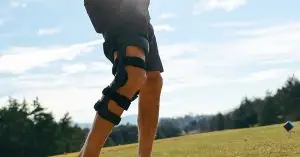
Functional Support Braces
Braces with supportive structures help guide knee motion and resist unwanted movement. They are more useful for reducing risk during dynamic activity than simple compression sleeves.
Examples include:
- Icarus Medical Ascender Knee Brace
Offers controlled support that helps guide knee motion during movement without restricting natural bending. This improved alignment and motion control can reduce stress on the menisci during activity. - Adjustable hinged braces
Provide moderate control of motion and improved confidence during dynamic tasks
Best for: activities with direction changes, moderate stability needs
Hinged Braces
These provide the greatest mechanical support outside of rigid immobilizers. Hinged braces help resist excessive rotation and side-to-side motion—the common mechanisms for meniscus injury.
Best for: high-risk activity, history of instability, or prior injury
When Bracing Is Most Helpful
A knee brace is most likely to reduce the risk of a meniscus tear when combined with other preventive strategies and used in appropriate situations:
- During sports or activities with cutting, pivoting, or rapid deceleration
- When muscles are fatigued (late in practice or game)
- If there’s a history of knee injury or subjective instability
- During phases of activity that involve sudden changes in direction
Bracing in isolation is less effective than bracing plus strength and technique training.
Other Critical Strategies to Prevent Meniscus Tears
Bracing should be considered one part of a complete preventive approach. Other measures that are at least as important include:
Strengthen Supporting Muscles
Strong quadriceps, hamstrings, glutes, and hip stabilizers support knee alignment and absorb forces that otherwise stress the menisci.
Improve Movement Mechanics
Proper landing technique, balanced knee tracking, and hip-knee-ankle coordination reduce harmful joint stress.
Include Balance and Proprioception Work
Exercises that enhance joint awareness help you adapt to unpredictable movement demands.
Gradual Load Progression
Avoid sudden increases in training volume or intensity, which can fatigue tissues and increase injury risk.
Mobility and Flexibility
Maintaining ankle, hip, and knee range of motion allows safer movement patterns.
Who May Benefit Most From Bracing
Bracing may be particularly helpful if you:
- Have a history of knee injury
- Experience mild instability during activity
- Participate in cutting, pivoting, or jumping sports
- Feel discomfort or “giving way” without a clear injury
- Are rehabbing from a prior injury and want added protection
In these cases, a supportive brace such as the Ascender knee brace can provide a balance of stability without restricting natural motion—helping reduce excessive stress that contributes to meniscus tearing.
When to Seek Professional Evaluation
Even with bracing and preventive strategies, knee pain, catching, or locking should be evaluated by a healthcare professional if they occur. A clinician can assess movement patterns, strength deficits, and structural concerns that may increase injury risk.
Final Thoughts
Can a knee brace prevent meniscus tears? Yes, it can help—but it isn’t foolproof. A knee brace can reduce certain risk factors by improving stability, alignment, proprioception, and joint control during activity. The most effective preventive approach combines bracing with strength training, technique work, and thoughtful progression of activity.
For many people—especially those involved in dynamic sports, with mild instability, or a history of knee irritation—a functional support option like the Ascender offers meaningful support as part of a broader strategy to protect knee health and reduce the likelihood of meniscus injury.