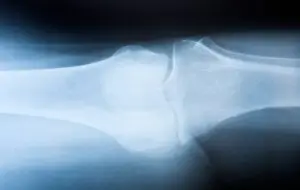
A meniscus tear sounds like a single diagnosis, but it describes at least two distinct situations. One is a sudden, traumatic injury in an otherwise healthy knee. The other is the slow fraying of tissue that’s been wearing down for years. They look different, feel different, and — importantly — are usually treated differently. Knowing which kind you have is the key to making sensible decisions about what comes next.
What the Meniscus Does
Each knee has two menisci: wedge-shaped pads of tough cartilage that sit between your thigh bone and shin bone. They act as shock absorbers and stabilizers, spreading load across the joint and protecting the smooth cartilage on the bone ends. When a meniscus tears, that cushioning job is compromised — but how it tore tells you a lot about what to do.
Acute (traumatic) Tears
Acute tears happen in a moment. A sharp twist or pivot with the foot planted — cutting on a soccer field, awkwardly changing direction, landing wrong — can catch the meniscus and split it. These injuries are most common in younger, active people, and they tend to announce themselves: a distinct pop, swelling over the following hours, and sometimes a knee that catches, locks, or won’t fully straighten.
The outer rim of the meniscus has a blood supply, while the inner portion does not. Tears in that well-supplied outer zone have a real chance of healing, which is why surgeons sometimes repair (stitch) an acute tear rather than remove tissue — especially in younger patients. A locked knee or a large, unstable tear may need timelier surgical attention.
Degenerative Tears
Degenerative tears are a different story. Rather than a single event, the meniscus frays gradually as it weakens with age and accumulated load. They’re most common from the forties onward and frequently travel alongside early osteoarthritis. Many people can’t point to any specific injury — the pain and stiffness simply creep in, sometimes triggered by something as ordinary as standing up from a squat.
One surprising fact: degenerative meniscus tears are often found incidentally on MRI in people who have no knee pain at all. In other words, the tear isn’t always the villain — it can be a normal feature of an aging joint rather than the true source of symptoms.
Why the Treatments Diverge
For acute tears, particularly repairable ones in active patients, surgery can be the right call to restore the meniscus and protect the joint. But for degenerative tears, the evidence points strongly in the other direction. Multiple high-quality studies have found that, for typical degenerative tears, arthroscopic surgery offers little advantage over a well-designed program of physical therapy and load management. Surgery on a worn meniscus can even hasten joint wear in some cases.
That’s why the first line for degenerative tears is usually conservative: targeted strengthening, activity modification, and strategies to reduce load on the affected part of the joint. Because degenerative tears so often accompany osteoarthritis, offloading the painful compartment can ease symptoms and help you stay active while the surrounding muscles do more of the stabilizing work.
Built for How You Move
For degenerative meniscus tears tied to early osteoarthritis, our team at Icarus Medical builds custom, lightweight unloader braces that shift pressure away from the affected compartment — designed around a 3D scan of your leg for a comfortable, daily-wearable fit.
The takeaway is simple: an acute tear in a young athlete and a degenerative tear in a fifty-year-old are not the same injury, and they shouldn’t automatically get the same treatment. An accurate diagnosis from your doctor — factoring in your age, activity, symptoms, and imaging — is what points you toward the right path.