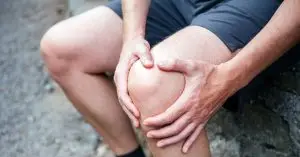
If you’re active in sports, fitness, or any high-impact movement like running, jumping, or cutting, you’ve likely wondered whether a knee brace can help absorb shock and reduce impact on your knees. The short answer is: knee braces can help—but not in the way many people expect.
Understanding what braces can and cannot do when it comes to impact forces will help you choose the right support for your goals, sensations, and activity level.
What “Shock Absorption” Really Means
When your foot strikes the ground during high-impact activities, the force travels up through the ankle, knee, and hip. Structures like cartilage, bone, ligaments, and muscles all share in absorbing and distributing that force. Healthy muscles and movement mechanics are the first line of defense against impact stress.
A knee brace does not create cushioning like a shoe or insole would, but it can influence how the knee tolerates and responds to those forces.
How Knee Braces Affect Impact Forces
A knee brace does not function like a shock absorber in a suspension system or thickly padded footwear. Instead, the benefit of a brace during high-impact activity comes from:
Improving Alignment and Control
Uncontrolled movement during high-impact activity increases stress on joint surfaces. A knee brace can improve alignment and reduce excessive or inefficient motion that amplifies impact forces.
When the knee tracks better during movement, the force is distributed more evenly—reducing focal strain.
Enhancing Proprioception
Proprioception is your body’s sense of joint position and motion. When a brace increases proprioceptive feedback, muscles around the knee react more quickly and efficiently. Better muscular engagement helps the knee tolerate impact loads more effectively.
Reducing Uncontrolled Motion
In activities that involve rapid deceleration, direction changes, or landing forces, a functional brace can limit excessive knee motion (such as unwanted side-to-side or twisting movements). This doesn’t absorb shock directly, but it helps the knee respond to impact safely.
Supporting Muscles During Fatigue
As muscles fatigue during prolonged activity, the knee becomes more reliant on passive structures. A brace can provide structural support that helps compensate when muscles are tired, reducing the risk of impact-related irritation.
What Knee Braces Don’t Do
A knee brace does not:
- Provide direct cushioning like a padded shoe or soft surface
- Absorb impact forces the same way shock absorbers do
- Replace the role of muscles, cartilage, and tendons in force distribution
If you expect a brace to “take the place” of muscular shock absorption, it’s important to reset that expectation. Braces support control and alignment—not direct mechanical damping.
Which Knee Braces Are Most Helpful During High-Impact Activity?
The type of knee brace that supports high-impact activity depends on what your knee needs:
Mild to Moderate Support (Compression Sleeves)
Compression sleeves provide general support and proprioceptive feedback. They’re comfortable and help steady the joint for light to moderate impact.
- Physix Gear Sport Knee Compression Sleeve – good for running, walking, or sports with mild knee discomfort
- Shock Doctor Knee Compression Sleeve – flexible and supportive during light impact
These braces help muscles sense motion better, which indirectly improves how impact forces are tolerated.
Functional Support Braces
Braces with structured support, but not rigid blocks, help control motion and reduce inefficient forces during high-impact movement.
- Icarus Medical Ascender Knee Brace – provides targeted support that enhances alignment and movement efficiency without overly restricting motion; useful during high-impact activities when more control is needed
- Mueller Adjustable Knee Brace – adjustable tension helps tailor support for changing activity intensity
These braces don’t absorb shock by cushioning, but by improving how the knee handles force.
Hinged Braces (Moderate Stability)
For people with mild instability, fatigue-related weakness, or prior injury, hinged braces offer more guidance without impeding performance.
Braces like DonJoy Performance Bionic or similarly structured support options help limit unwanted motion while allowing functional impact movement.
Exercises That Do Improve Shock Absorption
Healthy muscle activation and mechanics are the true shock absorbers of the knee. Exercises that improve strength, coordination, and landing mechanics can make a much bigger difference during high-impact activity than bracing alone.
Examples include:
- Eccentric quadriceps strengthening
- Glute and hip strengthening
- Plyometric drills with proper landing mechanics
- Ankle mobility work
- Movement pattern retraining with a physical therapist
When muscles are strong and coordinated, the knee distributes impact forces more effectively.
How to Use a Knee Brace During High-Impact Activity
If you choose to use a brace when running, jumping, or playing sports:
- Wear it during activity bursts that stress the knee
- Pair it with proper warm-up and movement prep
- Use supportive footwear with good cushioning
- Do not rely on bracing alone—combine with strength and mobility work
The goal is to support the knee while muscles and mechanics do most of the real shock absorption.
When Bracing Is Especially Helpful
A knee brace can be particularly useful when:
- You have mild instability or laxity
- You’re returning from injury and want added confidence
- Muscles feel fatigued during activity
- You feel pain during landing or rapid deceleration
- You want support without limiting motion
In these scenarios, a functional support brace like the Ascender knee brace can help improve joint alignment and control, allowing the knee to tolerate impact forces more comfortably.
Final Thoughts
Do knee braces help with shock absorption during high-impact activity? Yes, indirectly. They do not physically “absorb” force like padding or suspension systems, but they help the knee manage impact better by improving alignment, proprioception, and motion control. These factors allow muscles and joint structures to share impact forces more effectively.
A well-chosen brace—especially one designed for functional support like the Ascender knee brace—combined with strength, mobility, and movement training creates a supportive system that helps your knees handle high impact with less discomfort and greater confidence.